


The value of solar PV depends on how much energy you can use or monetise
Encore helps companies design solar PV systems around self-consumption, assessing battery storage, surplus energy management and advanced models such as collective self-consumption and Renewable Energy Communities.
The goal is not simply to install capacity, but to maximise the value of the energy produced: use it when it is needed, reduce grid withdrawals and assess whether energy not consumed on site can be managed more effectively.
Request an assessment Solar PV for businesses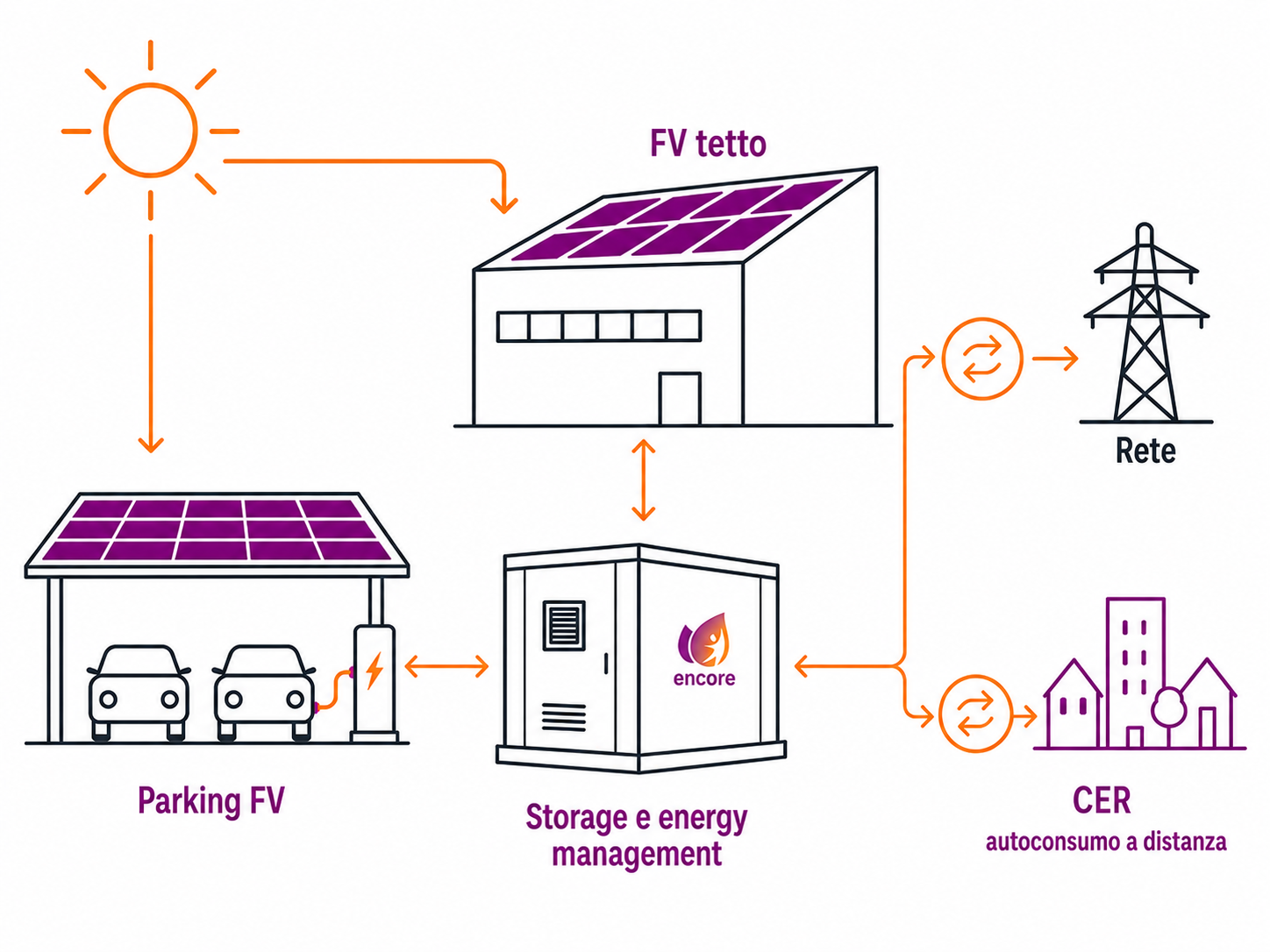
Producing energy matters. Using it well is what creates value.
Self-consumption is the share of energy produced by the solar PV system and used directly by the company. The higher this share, the greater the potential economic benefit of the project.
This is why the solution does not start from installed capacity alone, but from real consumption data: when the company uses energy, which loads are present, which surfaces are available and which technologies can increase the value of the energy produced.
We study when and how the company consumes energy to understand how much solar PV production can actually be used on site.
The size of the system is assessed based on available surfaces, consumption, technical constraints, expected production and economic objectives.
Self-consumed energy reduces withdrawals from the grid and helps make part of the company’s energy expenditure more predictable.
Storage, EV charging and energy management: useful when they create real value
Battery storage, electric vehicle charging and energy management systems should not be added automatically. They need to strengthen the business case and make the energy produced more valuable.
Storage can be useful when a significant share of solar PV production is not consumed immediately but can be used more effectively at other times of the day.
Solar carports and charging infrastructure can combine renewable production with electric mobility, making better use of available surfaces and supporting new energy needs.
Monitoring, flow control and intelligent load management help coordinate production, storage and consumption, improving the predictability of energy expenditure.
We compare the base case with integrated solutions, checking whether storage, EV charging or advanced load management generate a real advantage.
Beyond physical self-consumption: unlocking the value of energy not used on site
When solar PV production exceeds the company’s immediate consumption, part of the energy can be fed into the grid. In these cases, it is useful to assess whether surplus energy can be managed or monetised through collective self-consumption, remote self-consumption or Renewable Energy Communities.
Surplus production
If the system produces more energy than the company can use at the same time, the surplus should be analysed: it can be exported to the grid or become part of a more advanced energy strategy.
Remote self-consumption
For companies with multiple sites or different available areas, it can be useful to assess configurations where production and consumption do not occur at the same physical point, while remaining within the permitted frameworks.
Renewable Energy Communities
Renewable Energy Communities can allow multiple participants to virtually share locally produced renewable energy, turning a solar PV system into a broader local or industrial energy project.
From the consumption profile to an integrated solution
Analysis of energy bills, load profile, time bands and consumption trends.
Estimate of solar PV production based on site, surfaces, orientation and constraints.
Assessment of the share of generated energy that can be used directly by the company.
Comparison of scenarios with battery storage, grid export and possible models to monetise energy not self-consumed.
Definition of the technical and economic scenario most aligned with the company’s objectives.
A solution built around the real case
Self-consumption, storage, EV charging and collective energy models should be assessed as part of the same energy strategy. Their value depends on real site data: consumption, operating hours, available surfaces, technical constraints, energy costs, surplus energy management and the company’s objectives.
Would you like to understand how much energy you can use or monetise?
We start from your consumption profile and site characteristics to assess solar PV, self-consumption, storage, EV charging and possible surplus energy management models.
Request an assessment